
Register today for
Structured Literacy series for Tier 2/3 & Specialized instruction
Summer 2026 7/7, 7/8, 7/9, 7/14 & 7/16
Learn from the Literacy How experts in this 30-hour course developed by Dr. Margie Gillis, a Certified Academic Language Therapist and founder of Literacy How.
- Developed for special educators, reading specialists, interventionists, SLPs, and teachers of multi-lingual learners
- Training is in person and will take place in North Haven, CT.
- Course Time: 8:30am- 3pm
- Participants must attend all sessions
Course price is $995 and includes the 4 books in The Literacy How Professional Learning series.
Course Description
Literacy How’s Structured Literacy course is an accredited teacher training program by the International Dyslexia Association (IDA). Educators who complete the entire Structured Literacy course will be prepared to take the KPEERI exam and earn IDA’s CERI certification.
In this five-day (30 hour) course teachers will learn how to explicitly and systematically teach word recognition skills (i.e., phonemic awareness, decoding, and encoding) along with comprehension-related methods of instruction (i.e., reading comprehension, vocabulary development, and written expression) to students with SLD/Dyslexia and other language-based learning disabilities.
This course will empower teachers with knowledge to enhance their tiered intervention or special education for specialized instruction. The instructional strategies and techniques that teachers will learn may be used with an existing program or as part of a Structured Literacy approach.
Looking to enroll a group
Please contact us here to get started
"*" indicates required fields
limited seats AVAILABLE
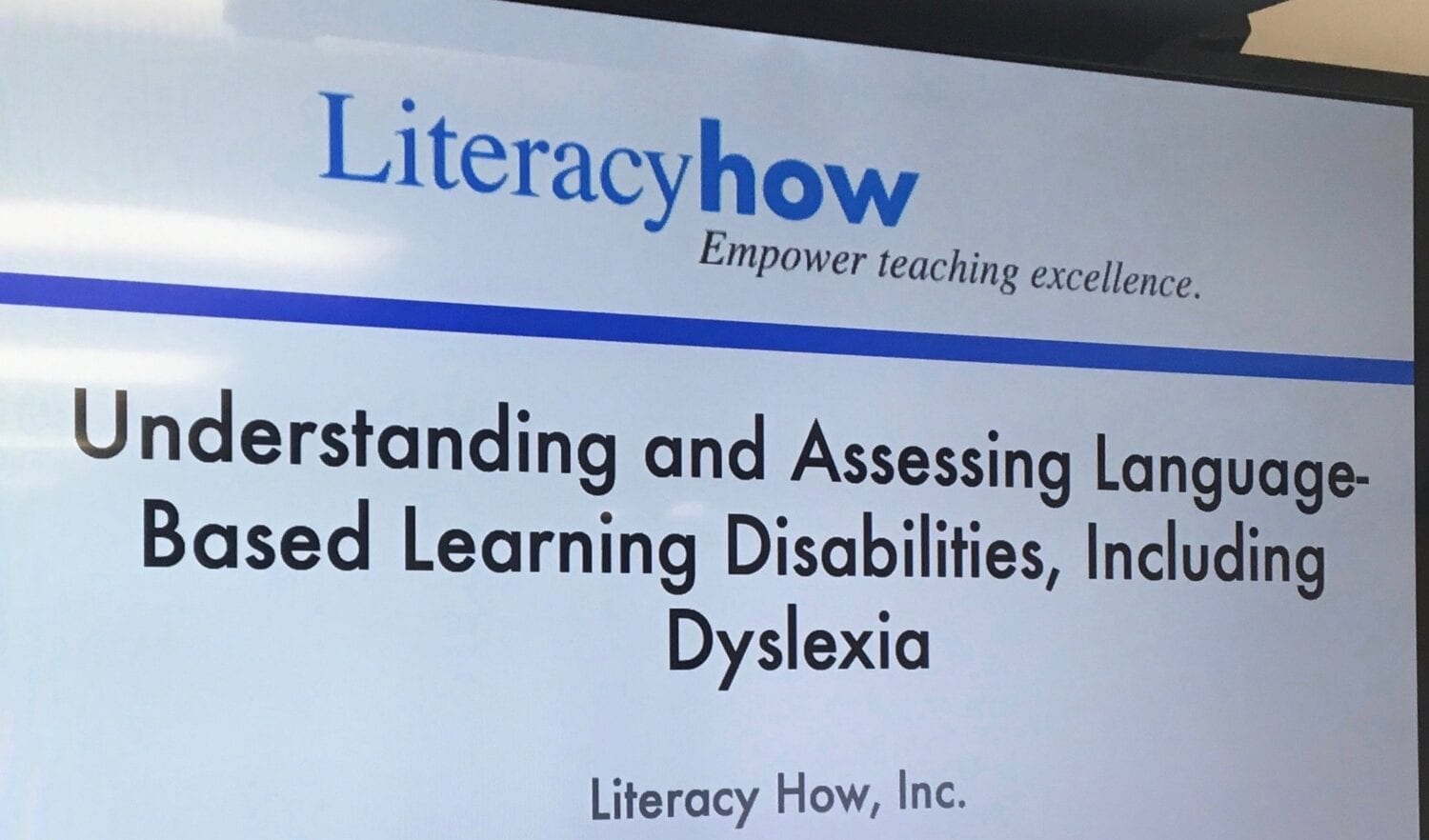
Structured Literacy II / III is offered across 5 full day sessions and customized for teachers based on their grade level
our course will include the following topics
1. Unlocking Literacy: Understanding Reading Disabilities, the Science of Reading, & Power of Phonology
This session sets the foundation for the series by explaining the Science of Reading and its connection to Structured Literacy. Discover why oral language is central to literacy development and understand the distinctions between evidence-based and research-based instruction, as well as between a program and an instructional approach. Explore the content of Structured Literacy and the Science of Learning. The session will highlight why this instruction is vital for students with dyslexia and other language-based learning disabilities, helping you identify warning signs and understand the role of assessments in recognizing phonological processing challenges. You’ll also learn about commonly associated cognitive difficulties, such as executive functioning, processing speed, and attention deficits.
2. Cracking the Code: Mastering Phonics, Orthography, and Structured Literacy
Students who struggle with word recognition often have difficulty with phonemic awareness, decoding, encoding and reading fluency. As a result, their reading is labored and error prone. Key to providing targeted instruction is diagnostic assessment. Understand how to link assessment data to reading material selection and learn how to engage your students in key instructional strategies and activities that teach these essential skills. Participants will also learn how to integrate handwriting into foundational skill instruction as they apply their new learning to lesson planning.
3. Morphology and Vocabulary Instruction: Linking Word, Structure, and Meaning
Morphology – the study of base/root words and affixes – helps readers decode and unlock the meanings of complex words. Learn how to teach these advanced skills, including morphology, in engaging and meaningful ways, and how to incorporate the skills into your lesson plans. In addition, semantics refers to meaning conveyed by words and sentences that help make sense of the world. Reading comprehension depends on knowing what words and sentences mean in context. Students with dyslexia and other language-based learning disabilities have difficulty with this important element of language. Learn how to incorporate explicit vocabulary instruction into your reading comprehension lessons.
4. Grammar and Syntax: The Building Blocks for Comprehending and Writing Sentences
Many children with comprehension problems have difficulty understanding sentences. Students must learn the function of the words in sentences and how their arrangement changes meaning. Learn engaging ways to improve students’ ability to speak, read, and write different types of sentences with a variety of structures. Participants will also learn techniques to support their students’ ability to comprehend sentences and write coherent, interesting, and complex sentences.
5. Reading Comprehension and Written Expression: Reciprocal Skills
The organization of spoken and written communication is referred to as discourse. Students’ proficiency in understanding text at oral and written levels predicts reading comprehension and writing proficiency. Learn about the relationship between language comprehension and reading comprehension, how to assess each, and importantly, how to support students’ development of a mental model while listening to and or reading complex text. Participants will learn a variety of activities to teach text structure and build students’ background knowledge, inferencing, and metacognitive skills to support comprehension
Our story
Model for Success
Our Services
SLD/Dyslexia
Connect
Looking for something specific search for it here.